We will post more about next month’s Ledbury Celebration annual food festival with added music, poetry and heritage shortly…but you can put the date in your diary – 11am to 5pm in St Katherine’s Car Park, Ledbury on Sunday 10th July.
But these events don’t happen by chance – we are looking for help with stewarding the event as a general steward or helping on the Food Group stand. We are looking for an hour or two of your time between 11am and 5pm. You won’t be on your own, and there will be professional stewards on site to help.
It’s a day when Ledbury receives many visitors and we want to put on a good show.
If you can spare an hour or two please contact David at 01531 634033 or Griff on 01531 633637
and…
If you know someone who likes putting up or taking down gazebos – please send them our way.
200mls. cider vinegar
400g. soft light brown sugar
100g. raisins
2 red onions, chopped
2cm. piece of fresh ginger, peeled and grated
seeds from 20 cardamom pods
4 – 5 star anise
grated zest of 1 lemon
1 tsp. salt
1kg. rhubarb, cut into 3cm. lengths
Put all the ingredients except the rhubarb into a large, heavy based pan, bring to the boil and boil for 5 minutes. Add the rhubarb and bring back to the boil. Reduce the heat and simmer for 15 minutes, stirring occasionally.
Cool slightly and spoon into dry, warm, sterilised jars, (you can sterilise them in a very hot dishwasher, or boil them in a pan of water for 10 minutes. Cover with a wax disc, then seal and label with the date. This chutney can be eaten straight away. Once opened it is best stored in the fridge, and will keep for up to a month.
TIPS
You can use this chutney in the usual way with bread and cheese, or alongside cottage pie, but it is also good heated through and served with roast pork, duck or grilled mackerel.
I sterilise my jars in the oven, at a low temperature, for about 15 minutes.
Fillet of Salmon with Sweet-Sour Beetroot and Dill Crème Fraiche – Serves 6
500g. / 1lb. cooked beetroot
50g. / 2ozs. unsalted butter
½ tbsp. oil
2 red onions, finely sliced
2 tbsps. caster sugar
1 ½ tbsps. red wine vinegar
salt and pepper
For the salmon:
30g. / 1¼ozs. unsalted butter
1 tbsp. oil
6 x 175g. (6oz.) salmon fillets
good squeeze of lemon juice
To make the dill crème fraiche simply mix the crème fraiche, mustard and dill together and refrigerate until you need it.
Cut the beetroot into small pieces. Season and taste for sweet/sour balance, you may want more sugar or vinegar. Set aside and reheat before serving. Heat the butter and oil in a frying pan and cook the onions until soft. Add the beetroot and increase the heat. Cook for 2 minutes, then add the sugar and stir until beginning to caramelize. Add the vinegar and let it bubble.
Heat the butter and oil in a large frying pan. Season the salmon on both sides and cook over a medium heat, flesh side down, for 1½ – 2 minutes or until golden. Turn over and cook for 1½ – 2 minutes. Reduce the heat and cook until done but still moist. Squeeze on some lemon juice. Serve with the beetroot and dill crème fraiche.
TIPS
We had this dish for lunch and I used vacuum packed beetroot which worked well. Just pat it dry before cooking. I also used dried dill, about 1 tsp., as fresh dill is often hard to come by.
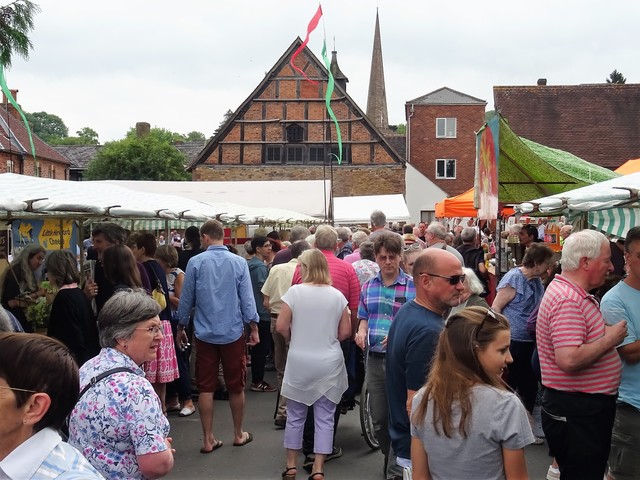
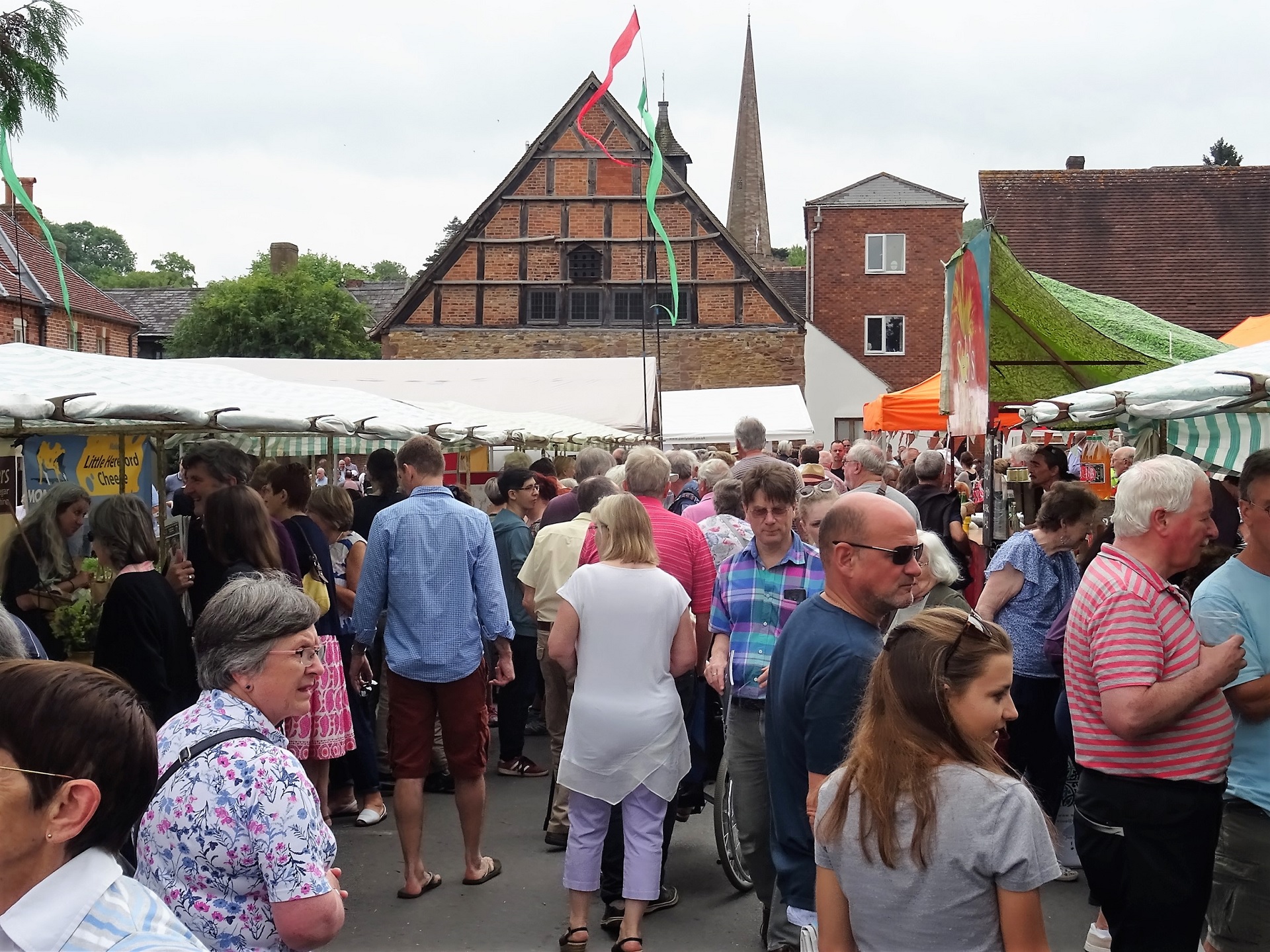
Ledbury Food Group with its partners Ledbury Poetry Festival and Ledbury Town Council invite you to join us at this year’s Ledbury Celebration on Sunday 10th July.
This year’s event will again be held in the historic setting of St Katherine’s, Ledbury by our very special 15th century Master’s House – it worked well in 2019! The event will include:
An outdoor food and drink market featuring the best of local produce and street food from the Three Counties for you to enjoy at the event or take home. We hope for as good a show as last time
“Al fresco” poetic entertainment provided by the Ledbury Poetry Festival
Outdoor musical entertainment featuring local musicians
Kids Kitchen, Cup Ceramics and a number of craft stalls
It’s the last day of Ledbury Poetry Festival so there’s lots going on, and our heritage buildings will be open for a visit.
The event will run from 11am to 5pm with entertainment from 12 noon.
As in previous years the Ledbury Celebration will be a free public event. The event has received funding from the Herefordshire Council Festivals and Events Discretionary Grant. This grant scheme supported events impacted by Covid-19 and was funded by the Additional Restrictions Grant provided by the Department for Business, Energy and Industrial Strategy.
If you are a locally based food producer using local produce and are interested in a stall at the event please contact our organiser Hannah Day at hannah@hannahday.co.uk.
Please contact us if you would like to help us setting up, stewarding or setting down after the event at Griff – 01531 633637. Your help makes these events smooth-running and successful – even an hour or two helps.
More information about the food market and the performance schedule will be available on this Food Group website nearer the event.
150mls. whipping or double cream, not single
50g. caster sugar
2 large eggs
2 large lemons, juiced and the rind of 1
Mix the flour and sieved icing sugar in a bowl. Melt the butter and press the dough into the base and sides of a 7 inch / 18cm. diameter pie tin (I used a sponge tin with a loose base). Bake blind for 20 minutes at 190 degrees. Cool. Reduce oven temperature to 150.
Whisk all the filling ingredients together and pour into the pastry lined tin. Bake for another 35 – 40 minutes until set. Allow to cool before slicing. This would be lovely served with some raspberries / blueberries and some coulis. It does not require more cream in my opinion.
TIPS
Baking blind stops you getting a soggy bottom. I have special baking (ceramic beans) but you can use rice or any dried beans. Just line the tin with baking parchment so that the base is weighed down.
I didn’t refrigerate my tart and it lasted for 3 days. Keeping it out of the fridge stopped the pastry going soggy. It was beautifully crisp the first day, not quite so crisp the following day but still very good.
Pour the filling into the tin whilst it is in the oven and on a baking tray then you won’t have to carry it across the kitchen – use a jug for the purpose.
SLOW COOKED SHOULDER OF LAMB WITH ROSEMARY AND ONION SAUCE – Serves 4 – 6
6 garlic cloves
5 sprigs of fresh rosemary
10 bay leaves
2 – 2.2kg. shoulder of lamb
salt & pepper
250mls. red wine
Preheat the oven to 160/ gas mark 2-3. Place the unpeeled garlic in the bottom of a large roasting tin with the rosemary and bay leaves. Sit the lamb on top and sprinkle with a little salt and pepper. Roast in the oven for 2 hours, then pour in the wine and roast for a further hour.
To make the sauce, melt the butter over a low heat, add the onion and saute until soft. Stir in the flour and then add the milk gradually, stirring all the time. Cook on a low heat for 5 minutes, add the cream and rosemary and cook for another 5 minutes, again stirring all the time. The sauce should not be too thick so add the little more milk if necessary. Season with salt and pepper.
Take the lamb out of the oven and transfer to a warm plate. Cover in foil whilst you make the gravy. Discard the rosemary, bay leaves and garlic and spoon off all the fat. Put the tin over a medium heat and add a little water (or vegetable water) and bring to the boil, stirring to make a gravy. Arrange the lamb meat in chunks on a serving plate, pour over the gravy and serve with the rosemary and onion sauce.
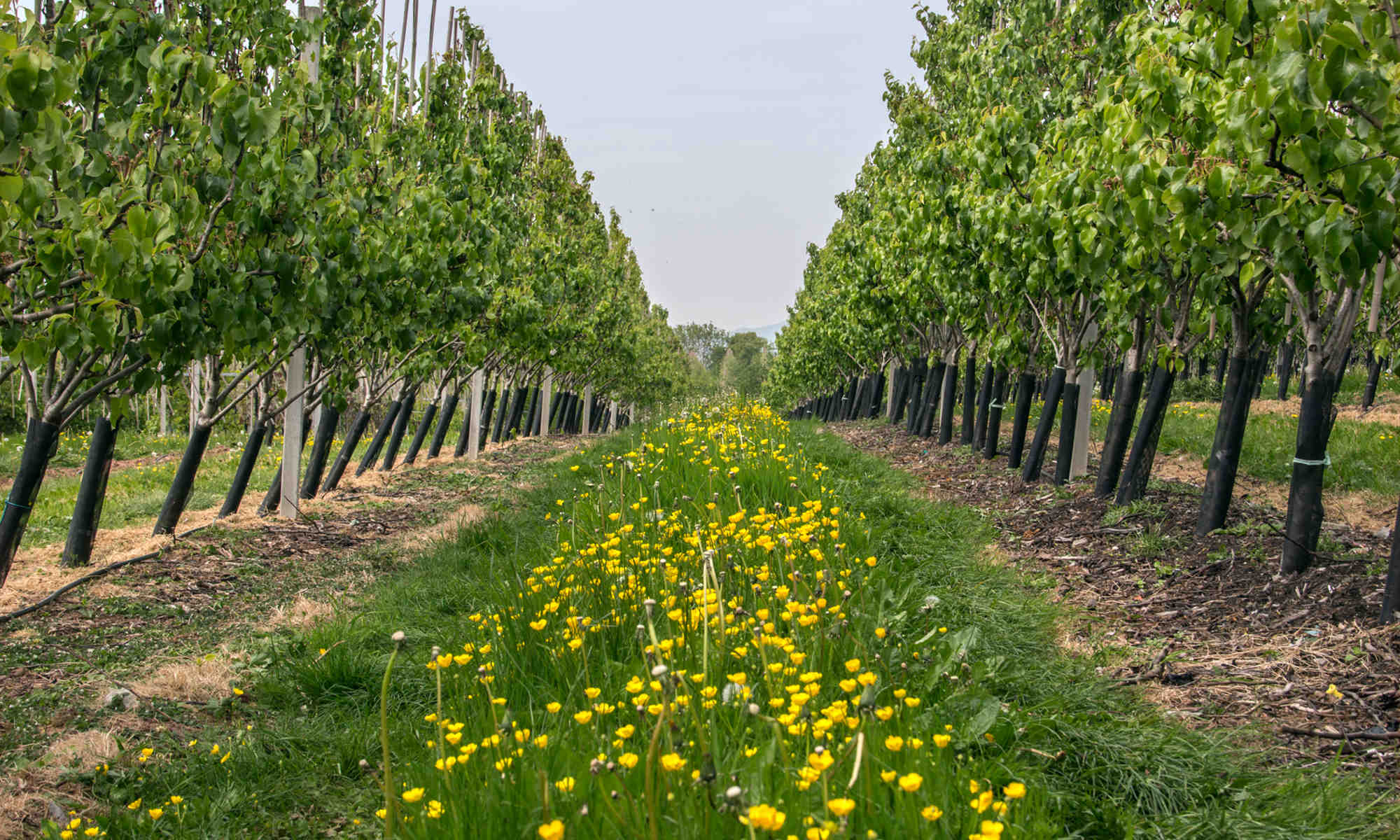
The buds are starting to burst on the apple trees, last autumn’s cider is getting ready to be tasted, and the time is fast approaching for Blossomtime in and around Putley where the Big Apple has been welcoming visitors for thirty years. Having cancelled this spring event in 2020 and 2021, the community organisation behind the Big Apple is delighted to be able to invite them back again on Sunday 1st and Monday 2nd May.
“When we were able to hold our autumn event last October, visitors were enthusiastic about the opportunity to enjoy being out and about in the countryside”, says spokesman Jackie Denman. “Our cider and perry community responded so positively when we managed to arrange a delayed Big Apple Cider and Perry Trials in July 2021. Now we can bring it all together again, with a Grand Cider Tasting at Putley Parish Hall, time spent under the apple trees at Dragon Orchard, and one-off events at Court Farm Aylton and Pixley Festival Church. The full programme is available online at www.bigapple.org.uk. We can’t wait to get back!”
As well as opportunities to taste a whole range of entries to the Cider and Perry Trials, cider and perry on sale will include Artistraw Cider and Perry, Bartestree Cider, Gregg’s Pit Cider and Perry, Halfpenny Green Cider Company and Pope’s Perry.
Highlights include:
‘#RethinkCider’, a talk from Jane Peyton, the UK’s first accredited ‘pommelier’ and founder of the School of Booze.
Drop-in printmaking with Laughing Betsy, supported by the Elmley Foundation, using ‘kitchen lithography’ and inspired by objects and images on loan from local families associated with cidermaking and apple growing.
Three guided walks each day will tell the stories of the orchards in and around Putley – will it be Norman’s Gap, Dorothy’s Delight or Nigel’s Pride?
And, of course, there will be the usual delicious lunches and teas (and this time a brunch) provided by local community groups.
Our guest blogger Liz Pearson Mann explores the parts of the animal our thoughts may not normally reach, shares her personal views with us and provides some recipes:
A native African mother gives her baby its first solid food, according to local cultural wisdom. She offers up raw liver, which she has first thoughtfully chewed. People of the Sudanese/Ethiopian border also highly value liver. They believe that their soul resides in the liver, and that a person’s character and physical growth depends on how well they feed the soul by eating it. Indeed, liver is so sacred that it cannot be touched by human hands. This report was given by Weston A Price in the 1930s. He was a Canadian dentist and researcher of indigenous tribes and their approach to health through food.
Liver – this is just one component of “nose to tail” eating. Cheek, heart, liver, tripe (stomach), kidneys, blood, ribs, tail bone, trotters and more could be added to the list depending on your tastes, of course. Although this is food we’ve long been eating (until recent decades), you might ask if we’d want to return to it. However, if you want to enjoy a healthy diet, and be sustainable in your eating, read on.
You could be forgiven for thinking that nose to tail eating is merely a frugal way to make do, and poor fare at that. But, this is the way our ancestors ate. They used knowledge passed down through generations in order to maintain the health of whole communities through the food they ate, and the health of their local natural landscape. Yet, those eating habits of small, remote indigenous communities are still relevant, even here in a modern Herefordshire landscape.
Wheat and Meat
On the Ledbury Food Group blog, in Diversify Your Grains: Throw in Some Beans we told how the stiff, fertile clay soils surrounding Ledbury have been the focus of heavy wheat crops for centuries, but not without problems. Even fertile soils can be worn out through constant cropping, if not rejuvenated by fallow periods, with grazing and manuring with livestock in the mix. Professor Thorold Rogers, in the Victoria County History of Herefordshire, explained how land during medieval times was let to lie fallow every three years, sometimes reduced to two. He wrote “But fallowing alone could not keep the land in good heart, so that by the end of the 15th century the arable land was being worn out.” There is only ever so much wheat we can grow and eat, and conversely only so many animals we can ever raise and eat. Balance has always been key. Enter “nose to tail” eating as part of the balance.
Sheep grazing in a fallow field
Ancestral Food and Thrifty Fare
The most nourishing minerals, vitamins and compounds (like gelatine) are to be found in parts of an animal we rarely eat these days. People have always known this without the need for modern science. They’ve observed the connection between health and food, passing this knowledge down through descendants by word of mouth for most of human existence: this is ancient nutrition. For instance, if you’ve ever bought glucosamine capsules for joint pain, you’re buying a medicine that is found in collagen and gelatine released in a pot of slow-simmered bone broth. You could see this as ancestral food versus techno food, and natural health versus Big Pharma.
“Nose to tail” eating is easy on the budget too; after all, liver, kidneys, black pudding, sausages and slow-roast joints of meat are well known for being thrifty fare. Farmers can’t raise just a pork chop, lamb shank, or beef topside joint – they have to raise the whole animal. Many say that to eat the whole animal is to respect the life of the animal. Though some may not wish to eat meat, or any part of an animal, a truth we may find harder to accept today is that all diets require the sacrifice of life. We are all part of the circle of life, however we eat.
Here are some ideas for “nose to tail” cooking:
Cheeky Recipes: Beef Cheeks
With rising interest in slow-roasting, slow-simmering and ‘slow food’, beef cheeks have seen some attention in the cooking world recently. D T Waller and Sons butchers, at The Homend in Ledbury, rate ox cheeks as a good buy at certain times of the year, so check in with them to find out when they may have them in stock.
If you’re looking for recipes, then here’s one that covers some basics:
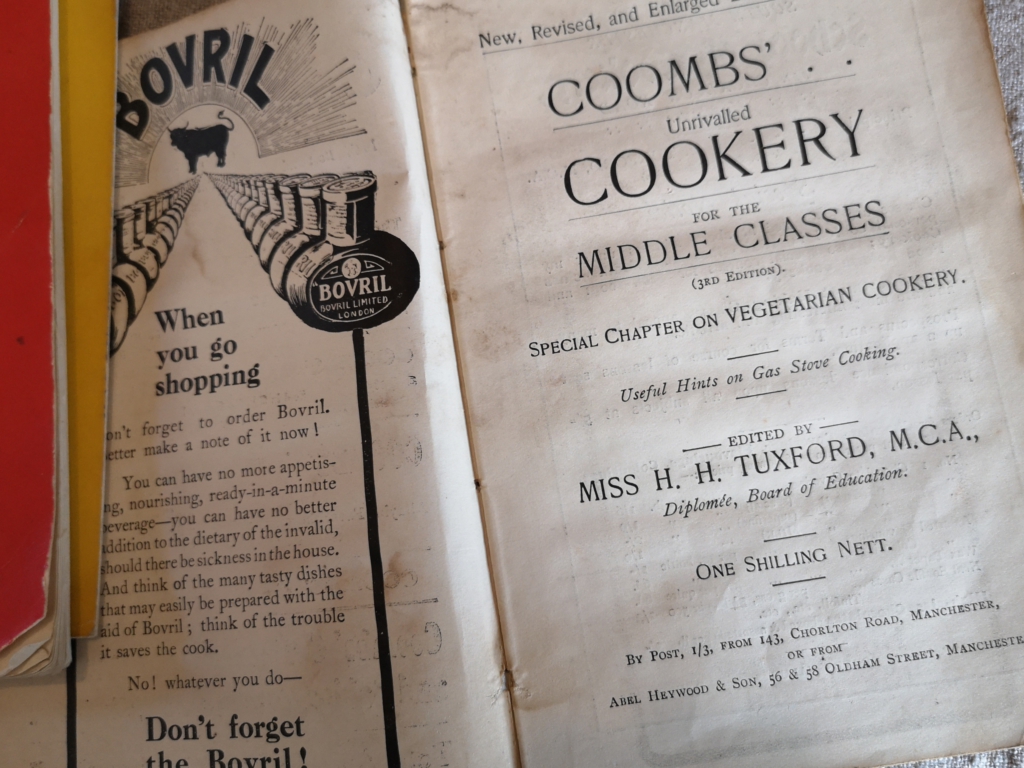
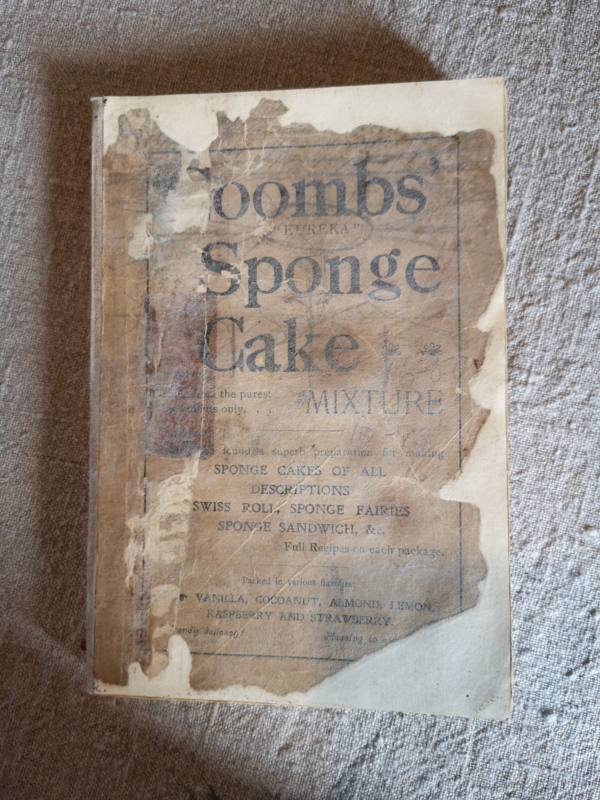
Sally Fallon, in her book about ‘Nourishing Traditions’ points out that American cook books of only a century ago were full of “nose to tail” recipes. The same could be said of a cook book I own which was my great-grandmother’s. Coombs Unrivalled Cookery for the Middle Classes was published in 1911 with a title which wouldn’t sit well with many people today!
My Great-Grandmother’s cookbook – full of nose to tail recipes.
Many of the recipe names in my book sound rather up-market (it’s the style), and though made from simple, basic ingredients, they’re still good. Here’s an easy one for grilled kidneys:
Grilled kidneys a La Maître D’hôtel – Serves 2
3 sheep’s kidneys
1 tsp lemon juice
1oz butter
1 tsp chopped parsley
Pepper and salt
Method:
Skin and core the kidneys and cut into halves
Grill for seven minutes, and serve with butter in each
For the butter:
Put all the ingredients on a plate and work with a knife until the butter absorbs the lemon juice and parsley.
Stewed Oxtail and Tomatoes – Serves 5 – 6
Here’s an oxtail recipe from my great-grandmother’s cookbook. It was more commonly seen in previous decades, but it still lives on, mostly as commercially-made oxtail soup. You’re unlikely to see oxtail (bone with the meat) in a supermarket, and it’s even hard to get it from a butcher’s, but D T Waller and Sons on The Homend in Ledbury sell it. It would be worth asking at any local butchers whether they normally sell it, or would order some in for you. (Please note, though, that modern food safety requirements restrict what butchers can sell today compared with butchers of the past.)
1.5 kg oxtail joints
Chopped ham (to taste)
1oz of cornflour
4 or 5 tomatoes
1 1/4 pints warm water
Little pepper
1 small onion
1 oz butter
1/2 tsp gravy powder*
* The original recipe lists ‘Coombs gravy salt’, which isn’t made anymore, but I take this to mean gravy powder, now mostly superseded by gravy granules. I suggest using the instructions on the back of the packet and adjust for 1 1/4 pints of water. If you can make your own stock, it will be tastier and more nutritious.
Method:
Wash and remove the fat from the oxtail, melt the butter in a pan, and fry until brown.
Also fry the ham (adjust amount to taste), the onion (sliced), and the tomatoes cut into slices.
Add the water and simmer slowly for two hours
Put the tail on a hot dish
Mix the cornflour with a little cold water, thicken the sauce with this, add pepper and gravy powder, and pour over the pieces of tail and serve. The sauce can be strained if liked
If you find you have some left over, you can freeze if for another tasty meal.
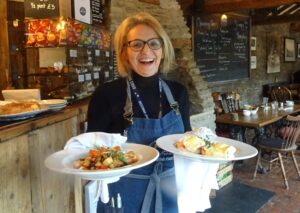
Many thanks to all who contributed to the success of last weekend’s Ledbury Big Breakfast celebrating a healthy start to the day and Ledbury and district’s riches in local food.
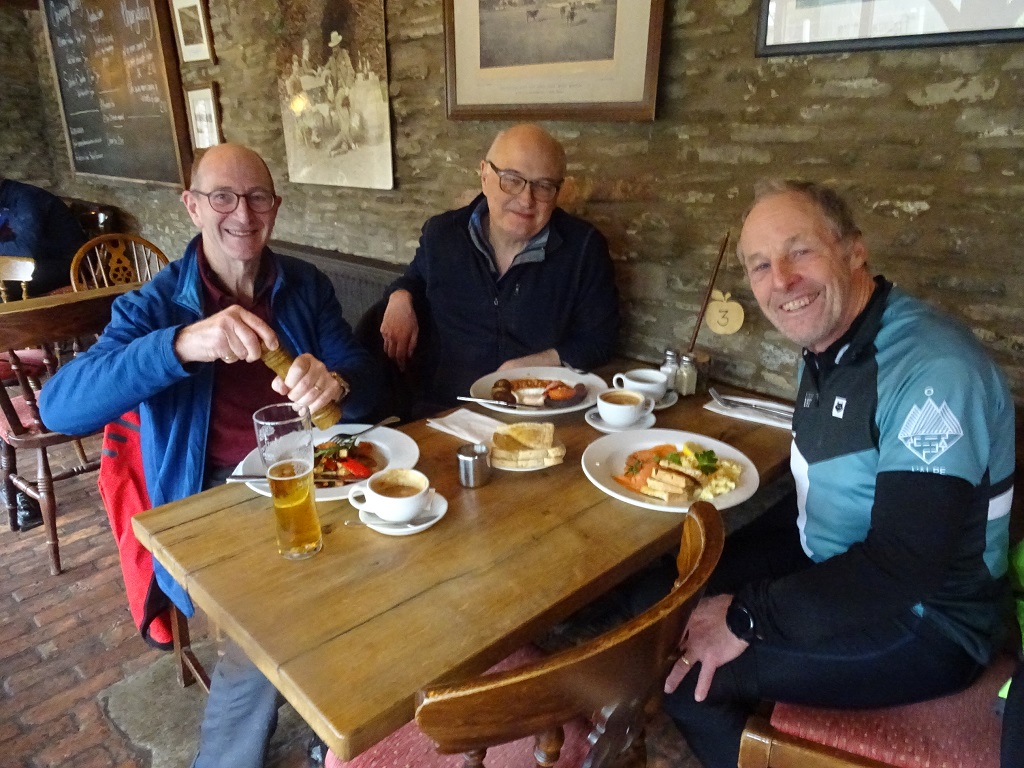
Nineteen local food businesses – Hotels, cafes, pubs and delis – provided the widest range of breakfasts of all sizes from the lightest to the “super heaviest” for those who chose to “eat out”. Local butchers, delis and the Country Market had local favourites for those who fancied a breakfast at home.
There were Full English Breakfasts of all sizes for the cognoscenti, but also lots of other delights including a Breakfast Nest, a twist on Eggs Benedict, breakfast salmon, breakfast baps with all kinds of filling, a loaded breakfast rosti and a breakfast waffle. Increasingly there more vegetarian and vegan options on the menus this year.
On Friday, “Breakfast Bells” pealed from the Church to mark the opening of the Big Breakfast weekend.
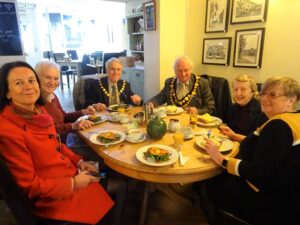
The High Sheriff of Herefordshire Jo Hilditch, The Chair of Herefordshire Council Cllr Sebastian Bowen, Deputy Mayor Phillip Howells, Town Clerk Angela Price and members of Ledbury Food Group celebrated the event with breakfast at the Market House, followed by visits to some of the businesses taking part. They also visited the Ukrainian Aid centre in the Market House and the new premises of Ledbury Food Bank.
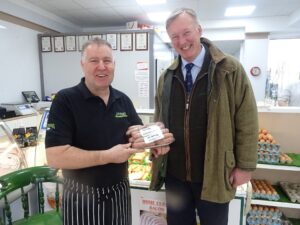
On Saturday, the busiest day, local MP Sir Bill Wiggin toured businesses in Ledbury to thank them for taking part and meeting most of our “first-timers”.
On Sunday there was more choice this year for those who fancied a special Sunday breakfast.
We hope that next year we can run the event at the end of January its
“traditional” time.
Please let us have your feedback and suggestions for next year.



 Drop-in printmaking with Laughing Betsy, supported by the Elmley Foundation, using ‘kitchen lithography’ and inspired by objects and images on loan from local families associated with cidermaking and apple growing.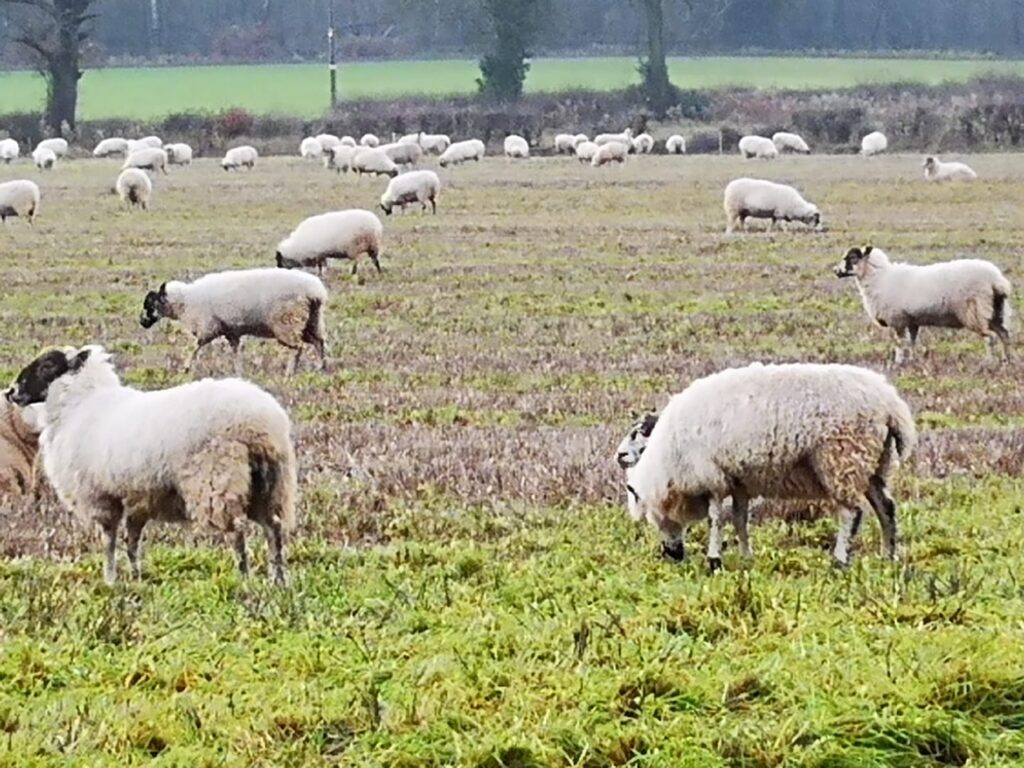
 Many thanks to all who contributed to the success of last weekend’s Ledbury Big Breakfast celebrating a healthy start to the day and Ledbury and district’s riches in local food.