Rayeesa’s Pop Up Indian Kitchen at Handley Organics

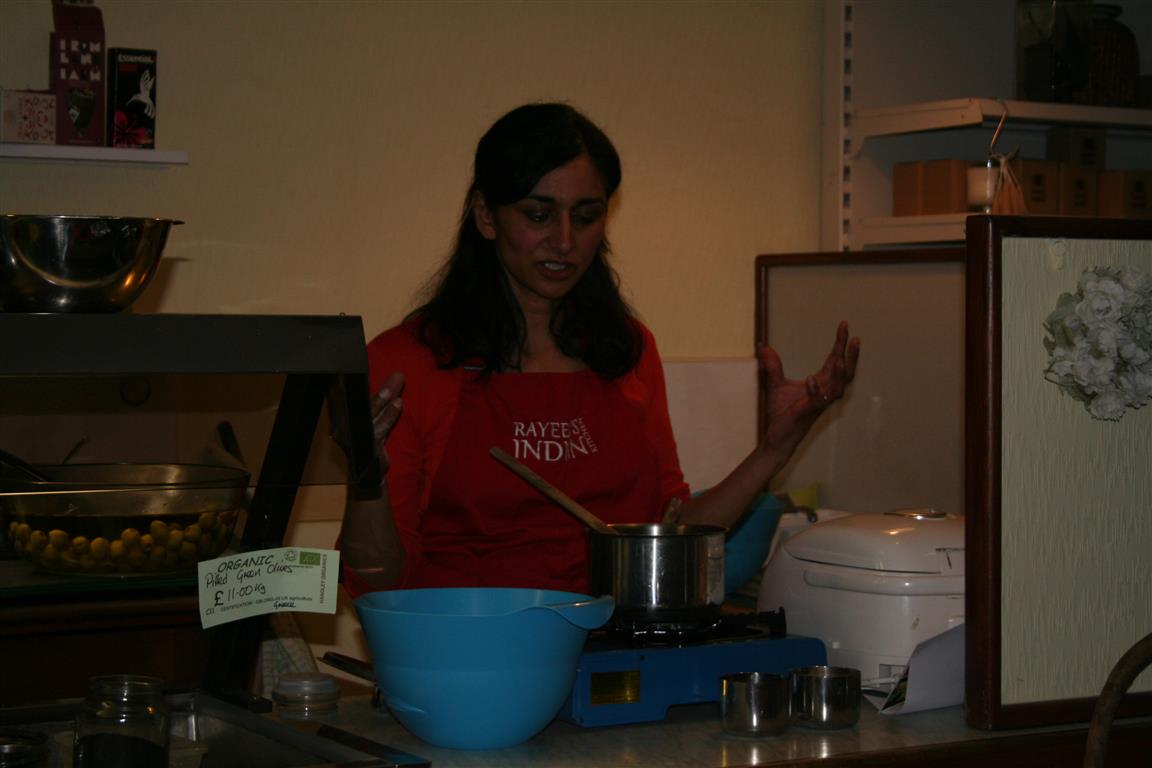
On Wednesday 11 March the first pop up cookery course was held at Handley Organics. Rayeesa of Rayeesa’s Indian Kitchen in Mordiford gave 3 hours of instruction on cooking Indian veggie food using Handley Organic’s own organic veggies.

Rayeesa Cooking Onions

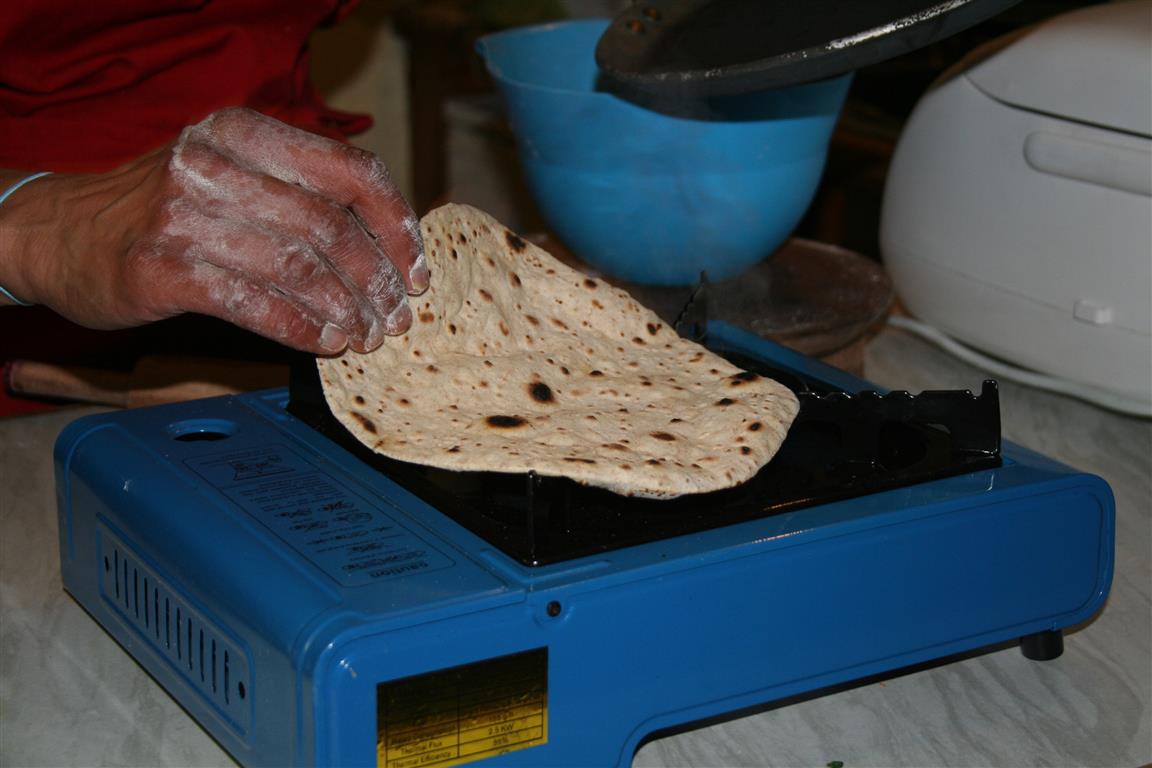
We cooked – and ate – chipatis, Meeti Dahl (lentils), rice, aloo mehti (potato with fenugreek leaf), mixed vegetable curry, and aubergine and tomato chutney. There were lots of tips along the way: the right way to cook onions, how to store spices for maximum freshness (in the freezer), not to fear ghee but use it sparingly for flavour (butter is no longer regarded as unhealthy and in any case ghee is the most healthy form of butter fat). We tried our hand with a dahl mathani – a masher that looks a bit like a wooden mallet with a long handle – and a chipati rolling pin.

Rayeesa Demonstrating Chapati Cooking

We started at 6.30 p.m. and three hours later a very flavoursome and spicy meal was ready. A little hot for some? Caroline Handley was available throughout and nipped downstairs returning with yoghurt and coconut milk from her shop to compliment the meal.

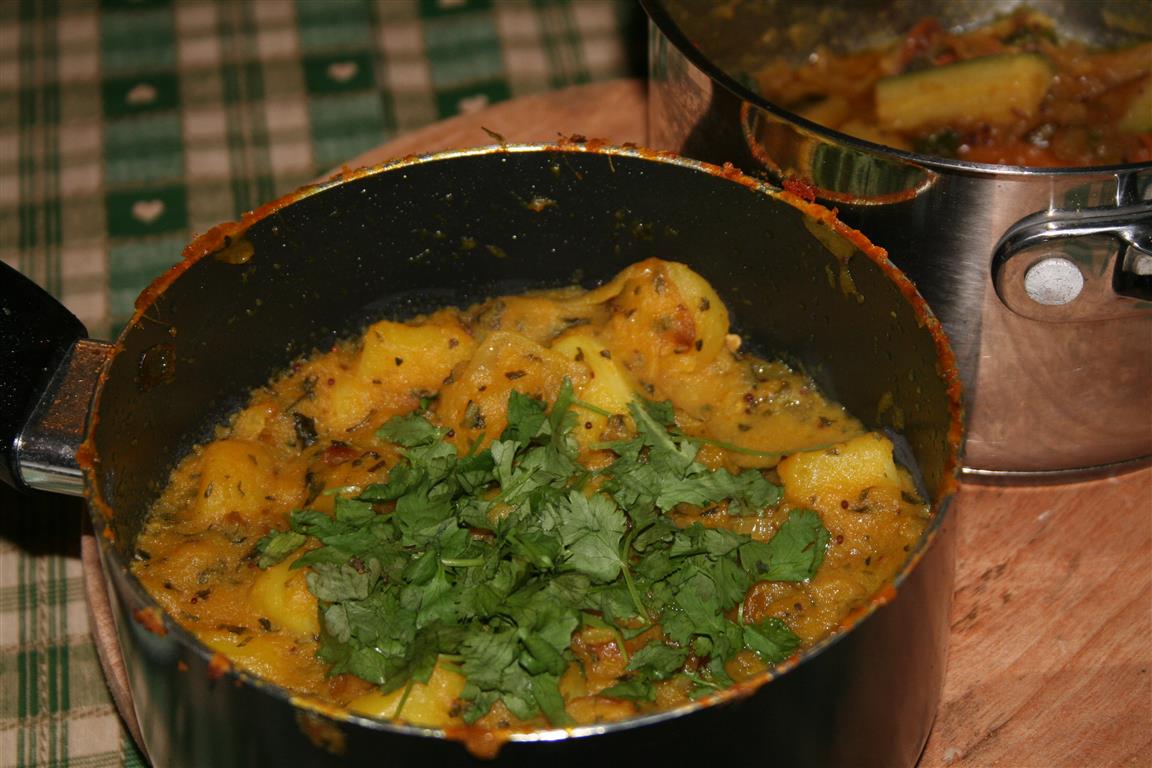
Aloo Mehti
Aloo Mehti
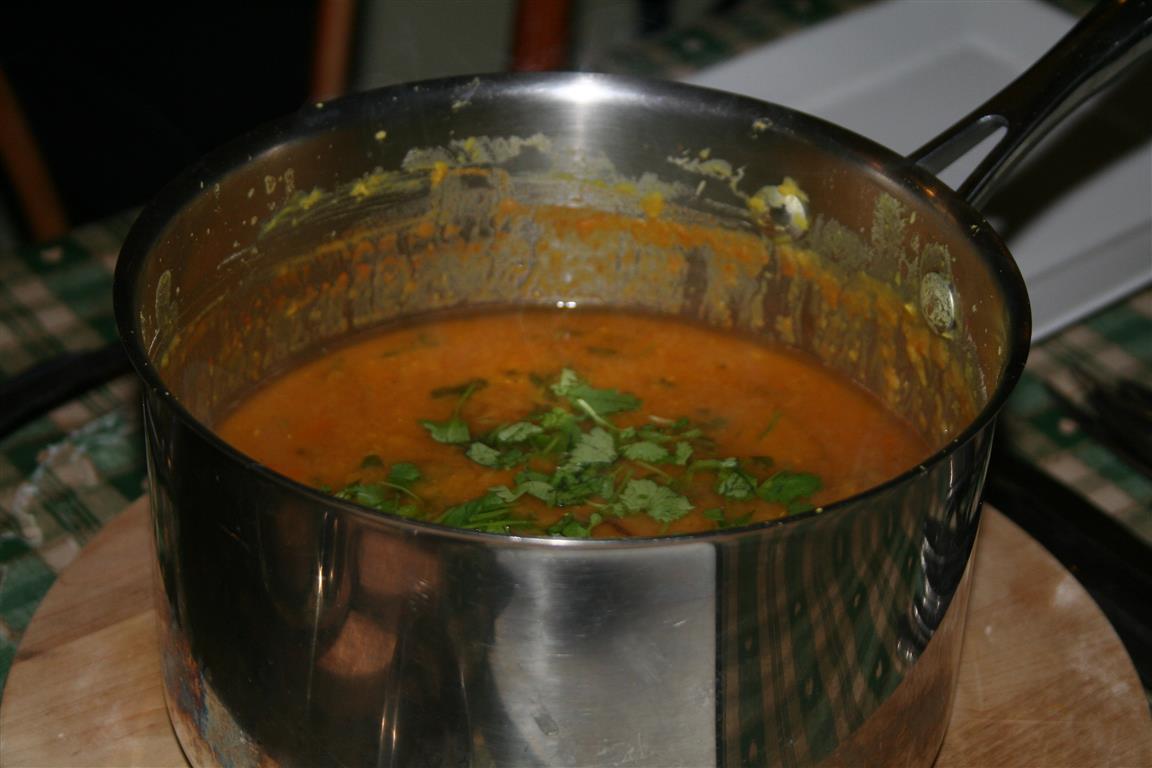
Meeti Dahl
Meeti Dahl

There will be more pop up cookery evenings at Handleys. Rayeesa will be back and other chefs will be invited. Keep an eye on Handley’s facebook page or ask in the shop for details.

If you have not yet ventured upstairs in the mini emporium that Handley Organics has become, it is worth pointing out that the shop carries the largest range of spices in Ledbury. Purchased in bulk from an organic wholesaler, the prices are reasonable and Caroline says their turnover is very high so the spices are always fresh. Organic ghee is also available in the shop.

At the end of the evening Rayeesa’s Indian sauces – made from all fresh ingredients and sold frozen – were available to buy.

Mixed Veg Curry and Aubergine and Tomato Chutney

Local food – what’s the point?

Amongst the new buzz words and phrases that have recently entered the lexicon, ‘local food’, ‘local produce, ‘locally sourced’ and others have come to define the trendy idea of supporting local producers rather than global retailers.  Detractors criticise this ethos as being no more than another example of hippy dippy thinking along the lines of the ‘wholefood revolution’ of the 1970s.  “What’s the point?” they ask disdainfully.  Supporters, on the other hand, cite well-argued and undeniably convincing reasons for their commitment to thinking local.  But is it really that black and white?
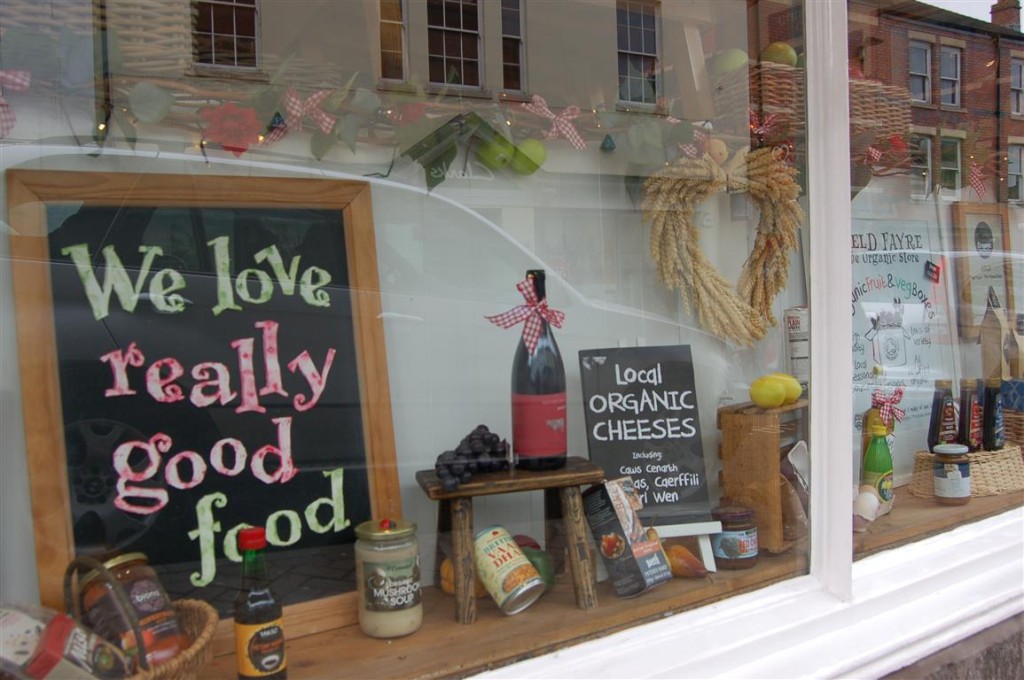
Farm shopThe usual reasons given for sourcing local food include: buying from people that can be trusted; supporting our local farmers; keeping money in the local economy; cutting carbon emissions through lowering food miles; and finding food that is fresh, tasty and seasonal.  These are all valid reasons that make perfect sense.  What one rarely hears, however, is the argument that links local food to health, an idea that merits further discussion.

To be swept along by the new wave of ethical evangelism and to enshrine the phrase ‘local food’ as the solution to our troubles is to miss the point.  ‘Local food’, though highly laudable as a concept, is not a destination, neither is it a starting point, but it is a crucial part of the journey before us.  That journey concerns health, and health should concern us all.  We are an increasingly sick species living in an increasingly sick environment, and we are all culpable.  The damage, degradation and destabilisation of our own species and of all life on this unique planet are down to us.  We have got things terribly wrong.  To understand this and to allow ourselves the humility to accept responsibility for it is to take the first step on that journey, a journey that promises to be exciting, scary, eventful, daunting, emotional but ultimately enlightening.

At the risk of sounding too simplistic, I believe that the industrialisation of our food is the culprit largely responsible for the devastation of our planet, and that real food could be a major part of the solution.  For clarity, I define real food as fresh, seasonal, produced using the principles of good husbandry, unadulterated and uncontaminated by chemicals.  To fulfil these criteria, it will usually be produced using organic methods on a small-scale at a local level – this is where the significance of ‘local food’ comes in, as part of a much bigger jigsaw and the source of real food.  Real food is what sustains life in all its myriad forms.  Real food starts with the soil.  Healthy soil teems with life, supports healthy plants and healthy animals, sustaining in turn healthy human beings and ultimately a healthy planet.  Industrial food does none of these things.

By sourcing local food that is real, we are making a stand against a culture of destruction and bad health.  We are told repeatedly that our current food system is the only one that will feed the world, but this is a lie.  The system that will feed – and heal – the world will be localised production of real food.  Yet some real foods (e.g. butter, eggs, unpasteurised whole milk, yoghurt, full-fat cheese and fatty red meats) are regularly demonised by an industry fully conversant with the high profitability of adding value to basic commodity crops by processing them, packaging them in brightly coloured containers and marketing them to obligingly compliant consumers.  To satisfy the demand for commodity crops to feed the factories, many millions of acres of what was once prime land are now under vast intensive monocultures saturated with life-taking pesticides (the suffix -cide means ‘kill’) and other toxic chemicals.

In contrast to this insanity, real food stands as a beacon of hope.  It is not disguised by processing, fancy packaging and slick marketing.  It is honest food produced by people who care – for their soils and farmland, for their crops and livestock, for the health and welfare of their customers.  They farm sustainably, ethically and organically without ever needing to use these words, and they live and work in the midst of us all.  Thus, in buying local food, we support and nurture them, because the rebirth of healthy future communities lies in the symbiosis of local producers and their customers.

We should be mindful, however, of two traps that can catch the unwary: local food is not necessarily real food, and buying locally should not exclude buying from artisan producers in other areas.  To illustrate the first point, there may be a local enterprise that uses imported ‘industrial’ ingredients in its products that damage the planet (for instance, palm oil, soya or corn products, all three of which are doing untold damage around the globe, and do not represent anything that might be called ‘local food’).  Is such a product ethical, sustainable or real?  It is a question that we must be brave enough to ask.

Secondly, when it comes to real food produced locally in another region, its purchase should not be excluded simply because it does not come from our own region.  We are in the early stages of trying to regain our connection to real food production, and all artisan producers who meet the criteria should be given support.  In an ideal world, all of the food needs of any given community will be met by the producers within that community.  We don’t yet live in such a world, but there is no harm in acknowledging everyone who is helping us to get there.

There is much more that could be said on this theme, but for now let us be satisfied that local real food will play a major role in the recovery of our damaged planet.  And, to return to the original question, let’s be clear – the point of local food is that it is only at a small-scale localised level, wherever it might be, that we can find the real food we need to sustain us, produced by people who understand the relationship between this and a healthy planet.
Model Farm


Author profile:

Rob Elliott is an advocate of small-scale, ecologically benign, localised real food production, as well as a believer in local economies in general.  He is the author of two books, The Food Maze and How To Eat Like There’s No Tomorrow.  Together with his partner, Sally Dean, he ran a ‘real food’ B&B near Ross-on-Wye for 12 years until 2014.  Both Rob and Sally are now active in bringing locally sourced nutritional food into the community through the development of food hubs.  For further information, contact Rob and Sally directly on sallyandrob@aspenhouse.net (tel 01432 840353).
We Ate a Rainbow

My partner and I are both in that post Christmas state of needing to shed some pounds so meals have been simpler and plainer recently than they otherwise might be. One evening I cooked a meal of baked white fish with leek and potato mash and sprouts.

“This is very tasty” he said “but it looks very bland – all white and pale green.”

(He likes to live dangerously).

I took his comment as a challenge and the following Saturday evening I served up a rainbow.

We started with a salad of red tomatoes and red peppers with a pomegranate dressing.

The main course was a spicy curry with cubes of orange-fleshed squash and yellow sweetcorn kernels. This was served with rice and steamed dark green curly kale. The vegetables all came from Handley Organics or from Abby’s stall just outside except for the sweetcorn which came from a tin!

For dessert I bought some blueberries. Grown in Chile, they were not exactly locally sourced, but they were organic. I kept back a few and lightly cooked the rest then stirred them into some gelatine dissolved in hot water along with some blackcurrant jam (which was the nearest to indigo that I could find) bought at The Shop at Bromsberrow. When the jelly had almost set I whisked it up into a mousse, poured it into some fancy glasses and topped it with low fat crème fraiche. Decorated with the remaining blueberries and served with a sponge finger it made a lovely, light dessert.

And the final colour of the rainbow? That was provided by a violet crème chocolate topped with a crystallized violet from The Velvet Bean.

A meal that was delicious, not fattening, in the majority locally sourced, and definitely not bland in colour!

chocolateviolet

News about local cookery demonstrations

Bored of cooking the same old meals? Desperately seeking inspiration that doesn’t involve a very long list of ingredients? Then the Aylton Cookery Demonstrations could be for you.

Local cook Helen Creese (formerly of Salvation Cafe) will be hosting a series of demos to inspire bored chefs and to entice curious cooks in to the kitchen. Helen champions the use of fresh, local and seasonal produce wherever possible and focuses on creating interesting, wholesome meals that can be enjoyed by all.

Using Ledbury’s finest butchers, Max the fishmonger and local growers and suppliers, Helen will demonstrate a series of meals that can easily be recreated at home.

Fabulous Family Suppers on 10th February will feature – Sausage and Cider Stew (sausages and cider supplied by Court Farm, Aylton), Poached Chicken Ramen (featuring a range of locally grown veg) and Salmon and Puy lentils with Watercress Mayonnaise.

The demonstrations are running from 10.30am to 2.30pm in Aylton on:

– Tuesday 10th Feb – Fabulous Family Suppers
– Tuesday 24th Feb – Marvellous Mains and Sensational Sides
– Monday 2nd March – Sublime Starters and Sweet Treats
– Tuesday 10th March – Lovely Lunches

The demonstrations are a fund raising event for Aylton Church and The Music Pool a local community music charity.  The cost is £35 per session to include refreshments and lunch.

Full more details and to book call Rebecca Jones on 01531 670 250 or email
“rebeccacourtfarm”  “@”  “gmail.com”.

Big Breakfast 2015 – photos

Many thanks to everyone who made the Ledbury Big Breakfast such a great success over the weekend.  We hope you enjoyed a good local breakfast from the wide range on offer. 

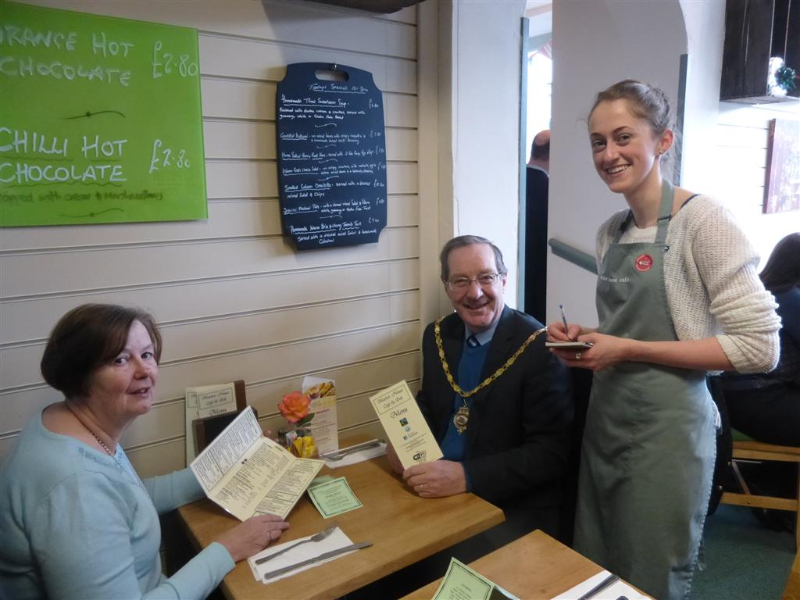
As well as breakfasts hot, cold, eat in or takeaway for you to enjoy, this year for the first time the weekend included a breakfast for Ledbury businesses early on Friday morning and a staff breakfast at John Masefield School.  Bill Wiggin MP and Mayor Bob Barnes made an early visit on Friday to a number of participants to celebrate the start of the event.

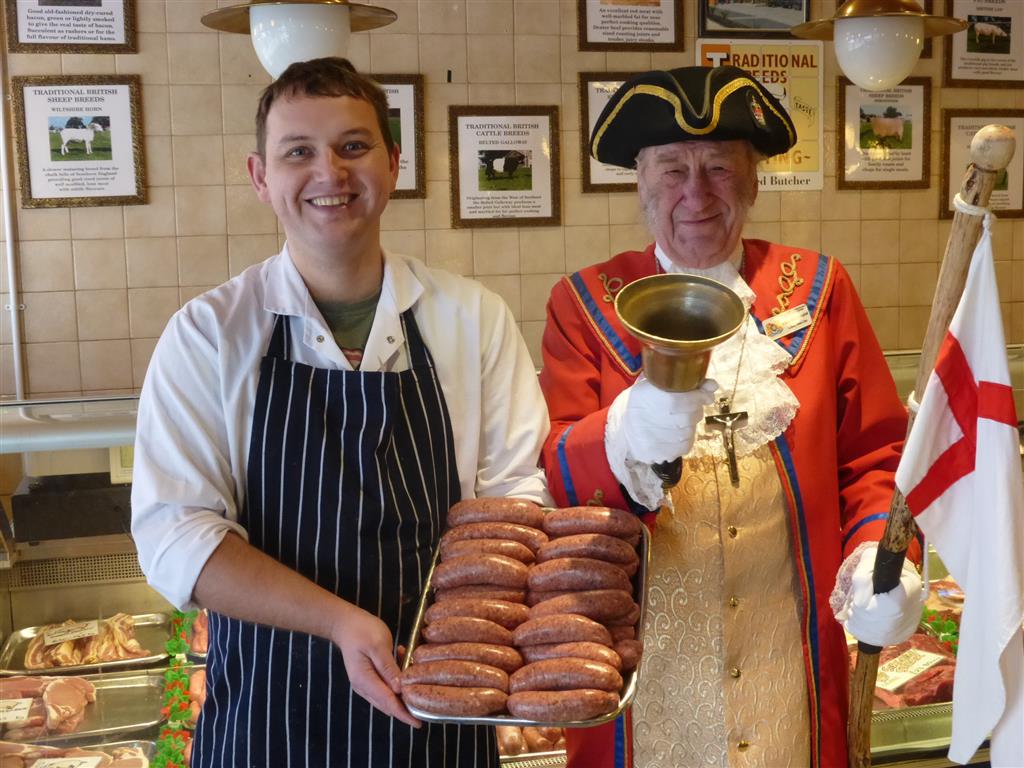
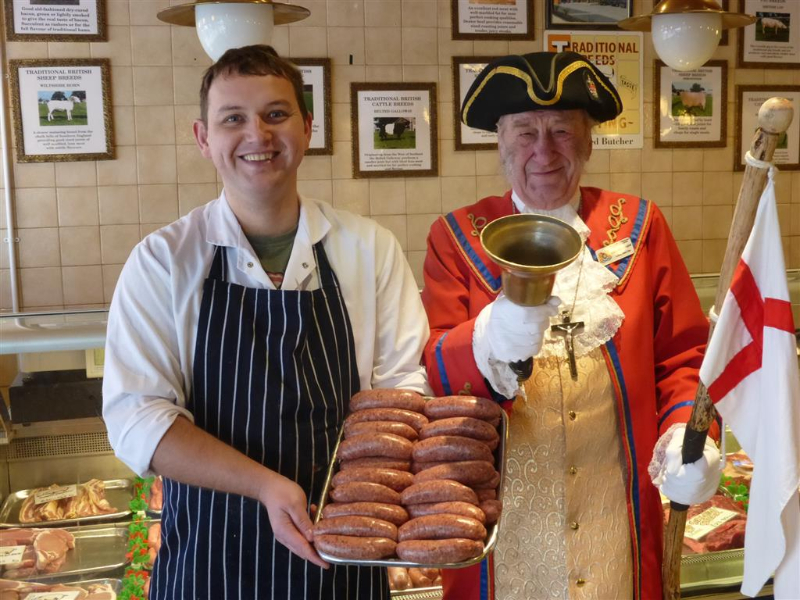
James Bodenham of Llandinabo Farm Shop and Bill the Bell celebrate the winning prize sausage

“Bill the Bell” Turberfield was on hand to hail the winning sausage in this year’s competition run by Trumpet Corner Tearoom and Llandinabo Farm Shop – a delicious pork, bacon, liver and onion creation suggested by customer Alan Brown who won a free breakfast for idea.

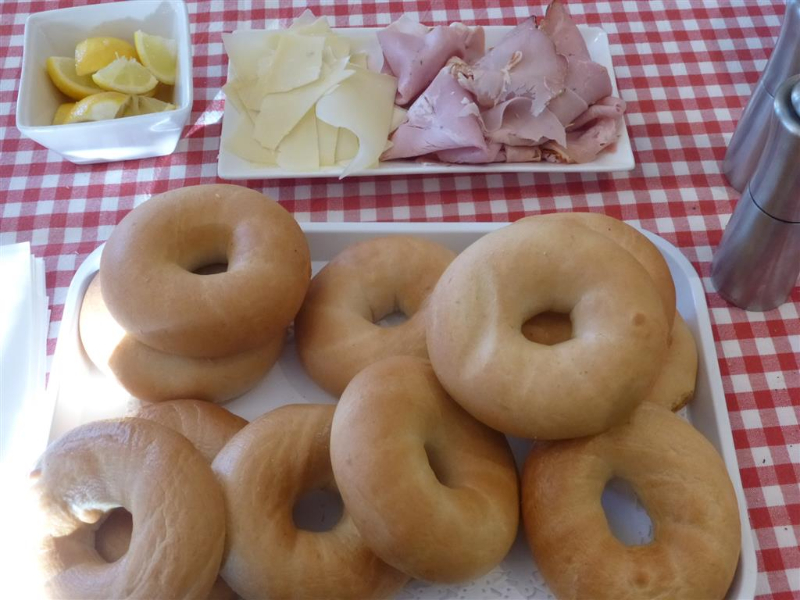
Special dishes enjoyed this weekend included Hereford Hop rarebit with chutney at the Market House Café, poached Herefordshire pear with bara brith at the Feathers, cheese and crispy bacon muffins at the Muse Café, eggs in Portobello mushrooms at Cameron and Swann, Eggs Benedict at Chez Pascal., and a special takeaway Bagel Bar at Four Oaks Delicatessen.  Mrs Muffins and the Café at Nice Things tempted those with a taste for the traditional with their hearty English breakfast. 

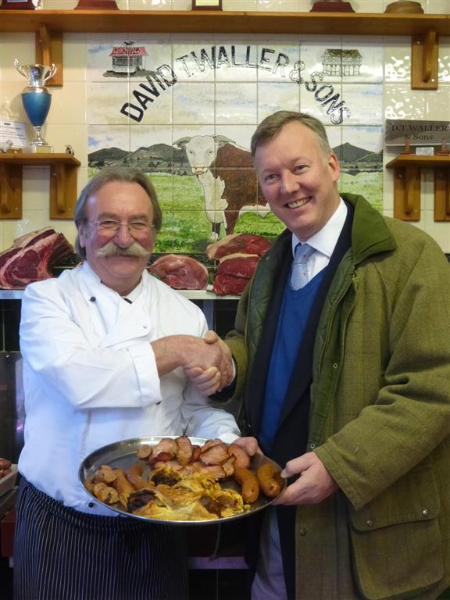
Dave Waller and Bill Wiggin MP admire a salver of local breakfast produce

Outside Ledbury town, the Scrumpy House Restaurant at Weston’s Cider, Trumpet Corner Tea Room and the Nest, Hereford Road all joined in the fun of the event.   In town, first timers Caffè 21 were cooking American pancakes and Delilah’s Café special breakfast omelettes.  Handley Organics offered a tempting choice of breakfast bakery, and at lunchtime the Talbot celebrated with its Rock and Roll Bingo brunch hosted by Andy Ward.  Our butchers Wallers, Gurneys and Llandinabo Farm Shop all had tempting offers to take home for breakfast.  Well done to all who took part this year!

Please let us know if you have ideas for making this event even better in the future.

Come and enjoy a feast of breakfasts at the Ledbury Big Breakfast

You can enjoy breakfasts from the lightest to the fullest at the Ledbury Big Breakfast 2015 taking place on Friday and Saturday 30th and 31st January.   This event is run by Ledbury Food Group in conjunction with Breakfast Week 2015 to celebrate breakfast and local food.

Paul Gurney of Gurney Butchers with ingredients for a good breakfast

Specials new this year for you to enjoy include a takeaway Breakfast Bagel Bar, together with Poached Herefordshire Pear with Bara Brith, Cheese and crispy bacon muffins, Eggs baked in Portobello Mushrooms, Sausages made with Cider, Apple Brioche with bacon and a cider syrup, a Breakfast Stack and a novel Rock and Roll Bingo Brunch. If you fancy Eggs Benedict, pancakes with bacon, omelettes of all kinds, or traditional home cured bacon and eggs then Ledbury is the place for you.  See full details on our events listing page.

A full range of local produced breakfast produce will be on sale at our butchers and food shops to build and enjoy a good breakfast at home.

Several cafes are opening specially from 8am on Friday to provide for those who would like a breakfast before work – or just an early breakfast.   The Country Market will offer a stop and go café/takeaway service for those in rush on Friday.

For a second year Trumpet Corner Café and Llandinabo Farm Shop are running a competition for a new sausage which they will sell during the Big Breakfast.  Get you entry in by 26th January!

Alongside the Big Breakfast, John Masefield High School are celebrating Breakfast Week with a special programme of lessons focusing on breakfast, and promotion of breakfasts in the school dining room for pupils and staff.

We are pleased to have such a range of local food on offer again, and to join in Breakfast Week 2015 with its key message of the importance of a good breakfast to start the day.

Bromsberrow Big Brunch

There is a chance to enjoy more delicious breakfast dishes featuring locally sourced ingredients later in February. On Saturday 21st February, The Shop at Bromsberrow will be holding the Bromsberrow Big Brunch from 11am – 1pm with traditional, cooked and continental breakfast items on offer. Come and visit our friendly community shop for this special event which will see the launch of the new café at The Shop and the announcement of the winner of the competition to name the café.
The Shop is in Bromsberrow Heath, just off the A417 before the motorway junction. (Postcode for Sat Nav: HR8 1PG)

Don’t forget Small Business Saturday…this Saturday

Small-Business-Saturday-UK-2014-Logo-BlueIf you are Christmas Shopping this weekend, see what your local independent shops and traders have to offer.

Saturday 6th December is Small Business Saturday – a day to support, inspire and promote small businesses.   Recent research by American Express on the economic impact of small independent businesses indicates that High Streets with a majority of independent businesses create a friendlier neighbourhood and plough 60p of every £1 spent back into the local economy.

Just by Christmas shopping you can bring real benefit to our local economy.

Our independent shops and traders in Ledbury and District have all kinds of local food and drink gifts – why not make up a gift of several local products?

…and we have a whole range of local independent shops in Ledbury for wider gift shopping.

So celebrate Small Business Saturday.

P.S. Get ideas for presents by browsing through the Producers Directory on this Website – this includes an Activities Offered section with all kinds of ideas for presents.